Financial close software brings the close into one finance-owned environment: it automates high-volume reconciliation and matching, captures audit evidence as part of the process, and gives real-time visibility by entity and task.
15 tools, each best for a specific type of team, evaluated against Gartner's market criteria with Gartner Peer Insights ratings for the tools in that market. Prophix One leads for mid-market teams that want a controlled, audit-ready close, rated #1 in North America and #2 for willingness to recommend in Gartner's close and consolidation market.
The right choice depends on close complexity, entity count, reconciliation volume, and existing systems, so match the platform to your team rather than to a ranking.
The accounting close is one of the most process-intensive activities for finance teams, and for most organizations it is one of the least optimized. As a business grows, the close grows with it: more entities, more accounts, more reconciliations, more people who need to sign off before the books can be locked. When that work is spread across spreadsheets, email threads, and disconnected systems, close work concentrates at the deadline by design, visibility thins out, and control risk builds in the days when there is least time to catch it.
Financial close software fixes that at the process level: it brings the close into one finance-owned environment, gives teams shared visibility into status by entity and task, automates the high-volume, low-judgment work, and captures the evidence auditors ask for as part of the close itself.
Below are the 15 best financial close software tools for 2026, each evaluated against the capabilities Gartner defines for the category and rated with third-party data from Gartner Peer Insights, with an honest set of strengths and trade-offs so you can match a platform to your team rather than to a ranking.
The 15 best financial close software tools for 2026
#
Tool
Best for
Gartner Peer Insights (all-time, FCCS market)
1
Prophix One
Mid-market finance teams that want a controlled, audit-ready close
4.5 (77 reviews); rated #1 in North America and #2 for willingness to recommend
2
BlackLine
Large enterprises running reconciliation and controls at scale
4.5 (573 reviews)
3
OneStream
Enterprises replacing several legacy finance systems with one platform
4.7 (540 reviews)
4
Oracle EPM
Organizations standardized on Oracle and large ERP ecosystems
4.8 (221 reviews)
5
CCH Tagetik
Complex statutory, regulatory, and tax reporting
4.5 (199 reviews)
6
Planful
Lean, budget-conscious teams that want close and FP&A together
4.5 (91 reviews)
7
Vena Solutions
Excel and Microsoft 365-native finance teams
4.7 (32 reviews)
8
Board
Enterprises pairing close with operational planning and analytics
4.6 (38 reviews)
9
Anaplan
Connected planning at scale across finance and operations
4.4 (28 reviews)
10
HighRadius
High-volume, AI-driven transaction matching and reconciliation
4.9 (19 reviews)
11
FloQast
Accounting teams that want a close-management layer over existing tools
4.6 (8 reviews)
12
Numeric
Modern accounting teams wanting AI-native close on NetSuite or QuickBooks
Not rated in the Gartner FCCS market
13
Cube
FP&A teams that want to stay in Excel and Google Sheets
Not rated in the Gartner FCCS market
14
Workiva
SEC filings, disclosure, and connected audit-ready reporting
Not rated in the Gartner FCCS market
15
JustPerform
Teams wanting guided, low-IT consolidation and disclosure
4.6 (59 reviews)
How we evaluated these tools
We assessed each platform against the capabilities Gartner defines for the Financial Close and Consolidation Solutions market, and we anchored each tool's third-party standing to Gartner Peer Insights, the verified voice-of-the-customer ratings finance buyers use to compare vendors. Primary weight went to the close process itself, which is the focus of this guide. The criteria:
Close workflow and task management. Orchestrating the full close and showing status by entity, task, and account in real time.
Reconciliation and transaction matching. Depth of account reconciliation, including AI-assisted matching that routes exceptions to the team.
Controls and audit readiness. Built-in controls, role-based access, and audit trails that capture evidence and approvals as part of the close.
Integrations. Connectivity to the ERP, GL, and source systems the close depends on.
Consolidation and reporting depth. Multi-entity consolidation, currency translation, and intercompany handling, covered in more detail in the consolidation guide.
Third-party validation. Verified user ratings and peer recognition from Gartner Peer Insights.
All Gartner Peer Insights figures below are all-time ratings for the Financial Close and Consolidation Solutions market, captured June 2026. Tools that operate in an adjacent category (FP&A or accounting-close) and are not rated in that specific Gartner market are marked accordingly.
1. Prophix One — Best for mid-market finance teams that want a controlled, audit-ready close
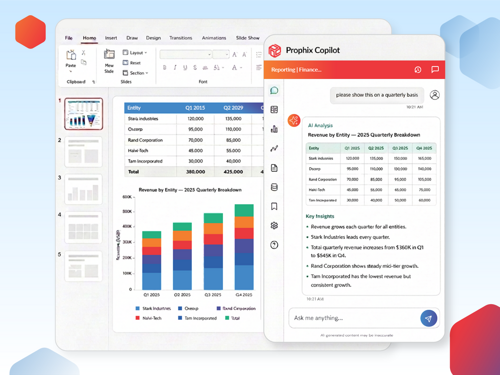
When close work spans spreadsheets, email, and disconnected systems, cycle time extends and review margin shrinks in the final days. Prophix One™ addresses this by bringing close data, reconciliations, approvals, and supporting documentation into one finance-owned environment, giving teams a single source of truth for close status and evidence across entities and periods.
Real-time dashboards give controllers and accounting leaders shared visibility into close progress by entity, task, and account, so they can see what is complete, what is delayed, and where intervention is needed. Prophix One Account Reconciliation software uses AI to automate high-volume transaction matching, helping teams reduce manual effort and improve accuracy, while finance stays in control by reviewing exceptions rather than manually matching routine items. Strong audit readiness comes from workflows that capture evidence, approvals, and changes as part of the close, supported by built-in controls, role-based access, and system-wide audit trails.
Key features: close task management and workflow, AI-assisted account reconciliation and transaction matching, intercompany management, real-time close dashboards, system-wide audit trails.
Pros: one finance-owned application for the full close, fast time to value for mid-market teams, strong reconciliation and audit-readiness depth, close connects directly to consolidation and reporting in the same platform.
Considerations: Prophix One spans planning, budgeting, forecasting, consolidation, and close, so teams adopting it for a single close use case realize the most value by phasing in the wider platform over time.
Gartner Peer Insights: 4.5 from 77 reviews. Rated #1 in North America and #2 for willingness to recommend in the Financial Close and Consolidation Solutions market.
Customer outcome: Jamul Indian Village Development Corporation, operator of Jamul Casino, shortened its month-end close from 10 days to 7, a 30% improvement, with Prophix One, and saved more than $15,000 in labor efficiency. JIVDC was an early adopter of Prophix One Account Reconciliation, streamlining reconciliation for greater control over the close.
Pricing: Quote-based. Reach out for more info
"Prophix One Account Reconciliation was a vital decision in our ever-evolving quest for expansion and having more efficient processes."
Yu Gnezil, Controller, Jamul Indian Village Development Corporation
2. BlackLine — Best for large enterprises running reconciliation and controls at scale
BlackLine is the established standard for account reconciliation, transaction matching, and close task management at enterprise scale, widely used by organizations with dedicated close and reconciliation administrators.
Pros: deep reconciliation and controls, large install base and mature ecosystem, strong fit for complex enterprise close programs.
Cons: reviewers note it is built for teams with dedicated administrators and can be more than smaller finance teams need; implementation is a substantial project.
Gartner Peer Insights: 4.5 from 573 reviews, the most-reviewed tool in the category.
Pricing: Quote-based; not publicly listed.
3. OneStream — Best for enterprises replacing several legacy finance systems with one platform
OneStream unifies close, consolidation, reporting, and planning on a single enterprise CPM platform, and is commonly chosen by organizations consolidating multiple legacy systems.
Key features: financial consolidation, close management, reporting, planning, journal entries.
Pros: one platform across close and CPM, strong import and export, customizable dashboards.
Cons: reviewers cite a steep learning curve and a meaningful implementation effort.
Gartner Peer Insights: 4.7 from 540 reviews.
Pricing: Quote-based; not publicly listed.
4. Oracle EPM — Best for organizations standardized on Oracle and large ERP ecosystems
Oracle Fusion Cloud EPM delivers planning, budgeting, forecasting, and financial close, and is a natural fit for enterprises already standardized on Oracle.
Pros: enterprise-grade depth, tight fit with the Oracle ecosystem, strong third-party ratings.
Cons: best suited to larger organizations with technical resources; complexity can outpace smaller teams.
Gartner Peer Insights: 4.8 from 221 reviews.
Pricing: Quote-based; not publicly listed.
5. CCH Tagetik — Best for complex statutory, regulatory, and tax reporting
CCH Tagetik, from Wolters Kluwer, pairs financial close and consolidation with strong statutory, regulatory, ESG, and corporate tax capabilities.
Key features: close and consolidation, statutory and regulatory reporting, tax, ESG, budgeting and forecasting.
Pros: deep compliance and statutory coverage, strong multi-standard reporting.
Cons: reviewers note breadth that benefits from experienced implementation support.
Gartner Peer Insights: 4.5 from 199 reviews.
Pricing: Quote-based; not publicly listed.
6. Planful — Best for lean, budget-conscious teams that want close and FP&A together
Planful supports consolidation, close, reporting, and FP&A in one suite, a fit for teams that want a single tool across planning and close without enterprise-tier cost.
Pros: simple integrations with a large connector library, no data-volume limits, accessible price point.
Cons: reviewers note implementation involves a consultant and onboarding resources.
Gartner Peer Insights: 4.5 from 91 reviews.
Pricing: Quote-based; not publicly listed.
7. Vena Solutions — Best for Excel and Microsoft 365-native finance teams
Vena runs planning, reporting, and close inside a familiar Excel and Microsoft 365 interface, which shortens the learning curve for spreadsheet-driven teams.
Key features: Excel-native modeling, audit trails, data integration, multi-currency, version control.
Pros: highly adaptable modeling, strong fit for cross-functional planning at scale.
Cons: reviewers note reporting granularity can be a constraint for some close use cases.
Gartner Peer Insights: 4.4 from 28 reviews.
Pricing: Quote-based; not publicly listed.
10. HighRadius — Best for high-volume, AI-driven transaction matching and reconciliation
HighRadius focuses on automating reconciliation and the record-to-report process for organizations with high transaction volumes, using AI to match transactions and surface exceptions.
Pros: strong automation depth for high-volume reconciliation, highest peer rating in the category.
Cons: smaller review base than the category leaders; best fit for high-volume environments.
Gartner Peer Insights: 4.9 from 19 reviews.
Pricing: Quote-based; not publicly listed.
11. FloQast — Best for accounting teams that want a close-management layer over existing tools
Built by accountants, FloQast sits on top of existing spreadsheets and ERPs as a close management and reconciliation layer, with a checklist-driven approach familiar to accounting teams.
Key features: close checklists and task management, reconciliation, documentation, workflow automation.
Pros: quick to adopt for accounting teams, lightweight layer over existing systems.
Cons: functions as a management layer rather than a full consolidation and reporting platform.
Gartner Peer Insights: 4.6 from 8 reviews.
Pricing: Quote-based; not publicly listed.
12. Numeric — Best for modern accounting teams wanting AI-native close on NetSuite or QuickBooks
Numeric is an AI-native close and reconciliation tool aimed at modern accounting teams, with close automation that syncs to ERPs such as NetSuite and QuickBooks.
Key features: AI-assisted close and reconciliation, flux analysis, ERP sync, close task management.
Pros: fast, modern interface, strong fit for high-growth accounting teams.
Cons: reviewers note it is built for accounting teams and newer to FP&A use cases; ERP coverage is still expanding.
Gartner Peer Insights: Not rated in the Gartner FCCS market.
Pricing: Quote-based; entry pricing reported around $30 per user per month.
13. Cube — Best for FP&A teams that want to stay in Excel and Google Sheets
Cube is a spreadsheet-native FP&A platform that connects to Excel and Google Sheets, with close and reporting features layered on top of planning.
Key features: spreadsheet-native FP&A, data integration and validation, customizable workflows, audit trail.
Pros: familiar spreadsheet interface, centralizes financial and operational data.
Cons: reviewers note ad-hoc flexibility for end users in templates can be limited; report filtering can constrain larger enterprises.
Gartner Peer Insights: Not rated in the Gartner FCCS market.
Pricing: Quote-based; entry pricing reported around $2,000 per month.
14. Workiva — Best for SEC filings, disclosure, and connected audit-ready reporting
Workiva unites financial reporting, disclosure, audit, risk, and ESG in one connected platform, with strength in SEC filings and board-ready reporting.
Pros: clean reporting interface, strong connected-reporting and disclosure capabilities.
Cons: reviewers note onboarding benefits from implementation specialists.
Gartner Peer Insights: Not rated in the Gartner FCCS market (operates in adjacent reporting and disclosure categories).
Pricing: Quote-based; not publicly listed.
15. JustPerform — Best for teams wanting guided, low-IT consolidation and disclosure
JustPerform, from insightsoftware, offers close, consolidation, disclosure, and planning with a guided, low-IT approach aimed at teams of varied sizes.
Key features: close and consolidation, disclosure management, self-service reporting, planning.
Pros: guided implementation, multi-standard support, low reliance on IT.
Cons: smaller review base and market presence than the category leaders.
Gartner Peer Insights: 4.6 from 59 reviews.
Pricing: Quote-based; not publicly listed.
How to choose the right financial close software for your team
The best financial close software is the one that fits your team's size, systems, and close complexity. Work through these factors:
Close complexity and entity count. Single-entity teams have different needs than multi-entity organizations consolidating across currencies. Match depth to your structure.
Reconciliation volume. High transaction volumes favor strong AI-assisted matching that routes exceptions to the team. Lower volumes do not require that depth.
Integration needs and ERP integration. Confirm clean connectivity to your ERP and GL, and map how data will move. The close depends on those integrations.
Customization capabilities and data mapping. Check how far workflows, reports, and data models can be configured to your chart of accounts and processes.
Controls, security protocols, and audit readiness. Look for built-in controls, role-based access, and audit trails that capture evidence as part of the close.
Task management functionality and visibility. Real-time status by entity, task, and account keeps a multi-team close coordinated.
Scalability and user experience. Confirm the platform scales with entities and users without degrading the experience for the team using it daily.
Pricing models and total scope. Decide whether you want a focused close tool or a platform that also covers consolidation, reconciliation, and reporting, which can reduce the number of systems you maintain.
What is financial close software?
Financial close software is the category of close management software finance teams use to run, control, and document the period-end close, from pre-close preparation through closed books. The accounting close is the structured process finance teams use to verify, reconcile, and lock financial records for a given period, ensuring the books accurately reflect the business before reporting begins.
A cloud-based close platform acts as a central command center for the close. It holds the close calendar and task lists, tracks status in real time, automates reconciliation and journal entry work, and captures the audit evidence that supports the reporting processes that follow. For finance teams, that means the close runs as one coordinated process rather than a set of disconnected handoffs.
How is financial close software different from accounting software and an ERP?
The ERP and the general ledger record and store transactions. Financial close software sits on top of them, orchestrating the work of turning those ledgers into closed, reportable books: the month-end close checklist, account reconciliations, journal entries, approvals, and the audit trail. In an accounting-software comparison, the distinction is record-keeping versus close orchestration and control. Most teams run both, with the close platform integrating with the ERP and source systems so the close works from a single, reconciled set of numbers.
What are the steps in the financial close process?
The financial closing process follows a consistent sequence. Close software supports each step:
Pre-close preparation. Confirm the close calendar, standardized kick-off triggers, and task ownership so work begins on schedule.
Sub-ledger and transaction review. Capture and review activity from source systems and the general ledger.
Account reconciliation and transaction matching. Reconcile balances and match high-volume transactions, routing exceptions to the team for review.
Journal entries and adjustments. Post accruals, corrections, and adjusting entries with supporting documentation.
Intercompany reconciliations. Reconcile intercompany activity across entities ahead of consolidation.
Review and approval. Controllers and accounting leads review results, with sign-offs captured in the workflow.
Consolidation and reporting handoff. Roll up entities and pass clean numbers to consolidation and reporting.
Common financial close challenges, and how software solves them
Close software addresses the recurring constraints of the period-end close through process and system design, not by asking more of the team:
Work concentrates at the deadline. AI-driven transaction matching and journal entry automation handle routine, high-volume work and route exceptions to the team, so review margin grows instead of shrinking.
Data accuracy and handoffs. Data integration from the ERP and source systems, with validation, reduces the manual handling that introduces errors.
Audit readiness. Centralized document management and system-wide audit trails capture evidence and approvals as part of the close rather than as a separate step after it.
Coordination and visibility. Real-time reporting and dashboards show status by entity, task, and account, so multi-team closes stay coordinated.
Multi-entity and intercompany. Multi-entity close coordination and intercompany elimination keep group results clean, with deeper consolidation handled in dedicated consolidation tools.
Regulatory compliance. Built-in controls and documentation support regulatory compliance and reduce control risk.
Benefits and challenges of financial close software
Benefits
Shorter close cycles through automation capabilities for repetitive matching and journaling.
Improved accuracy through reconciliation management and validation.
Stronger regulatory compliance provisions, supported by a complete audit trail.
Centralization of data into one finance-owned environment, replacing fragmented spreadsheets and email.
Real-time data access for FP&A workflows, reporting, and leadership visibility.
Tighter data integration with the ERP and source systems.
Challenges to weigh
Cost implications, since most platforms are quote-based and priced to scope.
Integration challenges with legacy or heavily customized systems.
The data integration effort during setup and historical data migration.
Ongoing maintenance and updates as entities, standards, and reporting needs change.
Implementation, pricing, and support: what to expect
Implementation timelines vary with close complexity and entity count. Lightweight close-management layers that sit over existing spreadsheets and ERPs can be live in weeks. Enterprise consolidation and close platforms such as BlackLine, OneStream, and Oracle EPM are larger projects measured in months. Mid-market platforms such as Prophix One sit between, with faster time to value for teams that do not need enterprise-scale configuration.
Plan for these implementation factors:
Integration with ERP systems and data integration strategies. Decide how the platform will connect to your ERP, GL, and source systems, and who owns each connection.
Historical data migration. Confirm how much history moves over and how it is validated.
Workflow configuration. Build the close calendar, task templates, kick-off triggers, and approval routing to match your process.
Change management plan. Sequence rollout by entity or process so the team adopts the platform without disrupting an active close.
Onboarding, training, and support. Confirm the resources each vendor provides and the support model after go-live.
Ask each vendor directly about its setup process and the resources it includes. Setup effort and approach differ across platforms, for example the BlackLine, JustPerform, and Prophix setup processes each reflect different product scopes, so confirm current specifics with each vendor.
On pricing, most close platforms, including Prophix One, use quote-based pricing tied to entities, users, and scope rather than public list prices. A small number of adjacent tools publish entry-level pricing. For an accurate comparison, request a quote scoped to your structure.
Financial close best practices
Strong close performance comes from process design, not from asking the team to work harder. The practices below consistently shorten close cycle time and reduce risk.
Standardize the close calendar and kick-off triggers. Define task owners, dependencies, and standardized workflows so the close starts on schedule and work does not concentrate at the deadline by design. A documented financial close process is the foundation everything else builds on.
Automate high-volume, repetitive work. Use transaction matching and workflow automation for routine reconciliations and recurring journal entries, so the team spends its time on exceptions and judgment rather than routine matching.
Build real-time visibility into the close. Real-time visibility into status by entity, task, and account lets controllers and accounting leads see what is complete, what is delayed, and where to intervene, rather than chasing status by email.
Capture controls and compliance documentation in the workflow. Record approvals, supporting evidence, and changes as part of the close, so compliance documentation and the audit trail are a byproduct of the process. This strengthens audit readiness and makes financial management reporting faster to produce and easier to defend.
Reconcile intercompany activity on a cadence. Run intercompany reconciliations regularly through the period rather than concentrating them at period-end, which reduces the volume of late adjustments and lowers risk in the consolidation handoff.
Measure and improve close cycle time. Track close cycle time, task completion, and exception rates as financial management reporting metrics, and use them to target the steps that add the most days to the close.
Move toward a continuous or soft close. Where the process allows, shift work earlier in the period with a soft close, so period-end carries less load, which reduces risk in the final days.
Key financial close terms
Accounting close: the structured process of verifying, reconciling, and locking financial records for a period before reporting.
Soft close: an interim close with lighter review, used between full period-end closes.
Close cycle time: the number of days from period-end to closed books.
Account reconciliation: confirming that account balances agree with supporting records.
Transaction matching: matching high-volume transactions, often automated, with exceptions routed for review.
Journal entries: accruals, corrections, and adjusting entries posted during the close.
Intercompany elimination: removing the effect of transactions between entities during consolidation.
Multi-entity close: coordinating the close across several legal entities.
Flux analysis: explaining period-over-period changes in account balances.
Audit trail: the system-wide record of changes, approvals, and evidence captured during the close.
Frequently asked questions
What is financial close software?
It is the category of tools finance teams use to run, control, and document the period-end close, including task management, reconciliation, controls, and close-status visibility. It coordinates the close above the ERP that records the underlying transactions.
How is financial close software different from accounting software or an ERP?
The ERP and accounting software record transactions in the general ledger and the ledgers beneath it. Close software orchestrates the work of turning those records into closed, reportable books: reconciliations, journal entries, approvals, and the audit trail. Teams generally run both, integrated together.
What is the difference between financial close software and financial consolidation software?
Close software manages the period-end process of verifying, reconciling, and approving the books. Consolidation software combines the results of multiple entities into group statements. Many platforms do both. For the consolidation side, see our guide to financial consolidation software.
Does financial close software integrate with my ERP?
Yes. ERP integration is core to the category. The platform connects to your ERP, general ledger, and source systems so the close works from a single, reconciled set of financial data. Confirm the specific connectors and integration approach with each vendor.
Does financial close software use AI?
The most useful application today is automating high-volume transaction matching and data automation, routing exceptions to the team for review, so finance retains oversight and judgment while routine matching is handled automatically.
How long does implementation take?
It depends on close complexity, entity count, and integrations. Lightweight close-management layers can be live in weeks, while enterprise consolidation and close platforms are larger projects. Match the implementation timeline to your internal resources.
How much does financial close software cost?
Most platforms use quote-based pricing tied to entities, users, and scope rather than public list prices. A small number publish entry pricing. Request a quote scoped to your structure for an accurate comparison.
Is financial close software only for enterprise organizations?
No. Options span lightweight layers for smaller accounting teams through enterprise platforms. Mid-market finance and FP&A operations have purpose-built choices as well, so match the platform to your size and close complexity.
How do I build the case for financial close software?
Tie it to outcomes leadership cares about: shorter close cycles, stronger controls, better audit readiness, and more confidence in the numbers. To see the impact on your own close, request a demo.
Run a faster, more controlled close with Prophix One
If your close is spread across spreadsheets and disconnected systems, the path to a shorter, more controlled close is consolidating the work into one finance-owned environment with reconciliation, controls, and reporting built in. See what Prophix One can do for your close. Book a demo or explore Financial Close Management.