

It’s 2026, and AI is no longer an optional “perk” for finance teams, but a necessary aid. In the current climate, teams are focusing on being agile more than simply efficient. To achieve this, they need to collaborate with AI agents to reduce the lag between data creation and decision-making, rather than use basic LLMs to eliminate a few manual handoffs.

In this guide, we explore several agentic AI tools for finance teams in 2026 that help them move from simply “automating” finance tasks to making it fully autonomous, aiding professionals in their efforts to budget, forecast, and close with more agility. As we move towards 2030, the best AI platforms shouldn’t replace professionals’ work, but augment it.

The Evolution: From "Automated" to "Autonomous" Finance 

Finance operations have matured rapidly from manual processes through the emergence and growth of automation, and now to AI-powered, autonomous support. In 2026, teams have access to tools with greater autonomy than ever before, confidently delegating once complex tasks to machines with confidence.

For decades, finance teams operated in a largely manual environment. Spreadsheets, email chains, and human data entry formed the backbone of budgeting, forecasting, and reporting. While flexible, this approach was fragile—version control issues, calculation errors, and slow cycle times made it difficult for leaders to act with confidence or speed.

As organizations grew more complex in the late 2010s and early 2020s, finance entered an automated phase. Consolidated ERP and FP&A platforms centralized data into single systems of record, improving visibility and governance. Rules-based workflows, scripts, and early AI capabilities began handling repetitive tasks like reconciliations, invoice processing, and baseline forecasting. Natural Language Processing (NLP) and machine learning accelerated analysis, but humans still played the central role—triggering workflows, reviewing outputs, and deciding what happened next.

By 2026, the most advanced finance teams have moved beyond automation into autonomy. In this phase, AI agents act as true finance teammates, capable of understanding intent and executing multi-step tasks end to end. These AI agents don’t just analyze data—they update reports, refresh forecasts, surface exceptions, and take action in conjunction with human oversight.  

Platforms such as Prophix One represent the peak of this maturity model, enabling finance teams to shift their focus from execution to strategy, confident that critical work is being handled accurately, consistently, and at speed.

The 3 Essential Categories of AI Finance Tools

AI finance tools fall under three core categories: strategic financial performance management (CPM), operational automation (i.e., for spend and accounting), and general productivity and auditing. Finance teams need to build technology stacks that cover each category for maximum agility and the best-informed decision making. 

Let’s break each category down with some key tool examples. 

  • Strategic CPM (The Brain): Prophix One (Best for Mid-Market), Anaplan (Best for Enterprise). 

  • Operational Automation (The Hands): Ramp (Spend Mgmt), Stampli (AP), HighRadius (Treasury). 

  • Productivity (The Assistant): Microsoft Copilot, DataSnipper. 

Best AI for CPM & FP&A: Strategic Performance Management 

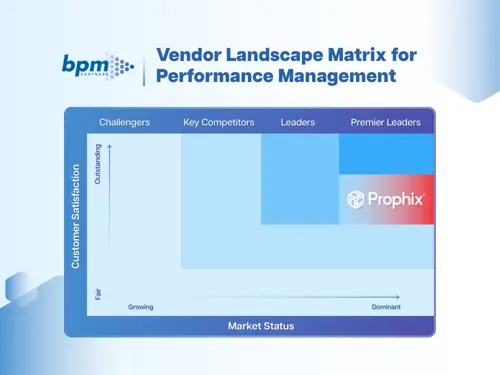
CPM platforms help finance teams plan, budget, and close. They’re single sources of truth that bridges financial strategies with goals, pulling information from disparate sources to support data-driven decision-making. Prophix One leads other platforms by example with its explainable glass-box AI, offering secure, reliable agentic support.  


Prophix One, the autonomous finance platform gives users a single, accessible overview of their financial performance, from budgeting and planning, to forecasting, consolidation, and close backed by AI agents that assist with queries, report generation, and complex insights.  

Powered by Prophix One Intelligence, the Prophix One Agents operate as teammates alongside finance teams—helping them budget and forecast faster, surface insights through charts, tables, and graphs, support scenario planning, and analyze close data—while saving crucial time that would otherwise be spent digging through data silos. 

The Prophix One Budgeting Agent, for example, can update assumptions, execute bulk changes, and check for errors and anomalies with simple, plain-language questions. In seconds, it can update multiple records and provide insight and help with scenario planning that would otherwise take hours of human expertise and effort. 

Meanwhile, the Prophix One Reporting Agent answers complex questions and produces actionable visuals, charts, and breakdowns on a variety of in-depth topics. For example, our users can ask the agent questions about operational expenses, mid-meeting, for immediate, reliable answers. 

Completing the picture, the Prophix One Reconciliation Agent uses artificial intelligence to support controllers and accounting teams during the close process. It answers critical questions about close status, projected close dates, and user performance—helping teams improve automation, efficiency, and visibility. By analyzing close data, the agent enables users to quickly assess progress, identify delays, and compare workloads across entities and individuals. 

Ultimately, Prophix One’s AI agents support finance teams that need concrete answers, fast, freeing up capacity and boosting operational confidence. 

Enterprise CPM platforms like Anaplan are built for large-scale scenario modeling across finance, sales, and supply chain, with AI capabilities that support simulation and analysis as part of a broad, cross-functional planning environment. Prophix One, by contrast, is finance-native—embedding AI agents directly into budgeting, forecasting, reporting, and close workflows to accelerate execution, improve accountability, and support the day-to-day decisions finance teams make. 

Prophix One’s natively embedded AI appeals more to mid-market users, with a glass-box approach and TrustArc-certified AI security. It’s transparent, easier to handle, and is agentic by design, keeping true finance autonomy accessible to all.

Best AI for Spend Management & Accounting Automation

Tools in this category essentially handle the “grunt work,” in that they can read receipts, run predictions, and even detect fraud. Teams may consider tools in this category such as Ramp, Stampli, and HighRadius for their tech stacks.  

ERP, CRM, and HRIS tools, which pull, clean, and manage data, all fall into this category - and, Prophix One integrates with more than 400 of these data sources to answer questions, tell stories, and inform bold decisions. 

Typical automation tools in this category include: 

  • Ramp, which reads invoices and expenses and learns context from your patterns, effectively helping you auto-code payments and process routine tasks. 

  • Stampli, specialized in AP, which integrates with accounting software to help you detect fraud in invoices. 

  • HighRadius, an AR automator with AI-powered forecasting for cash flow, creating scenarios by sourcing bank statements. 

Best for General Productivity & Audit 

Tools in this category (Microsoft Copilot for Finance, DataSnipper, and ChatGPT Enterprise) specialize in boosting personal efficiency. 

  • Microsoft Copilot is ubiquitous across Excel and Outlook, simplifying workflows, automating data entry, and summarizing threads and conversations. 

  • DataSnipper operates within Excel and is designed to support auditing and financial control, reviewing documentation, and extracting and reconciling crucial data. 

  • ChatGPT for Enterprise offers a scalable Gen AI assistant frequently used to draft emails, check policies, and summarize documentation. 

The AI Revolution in Finance

AI is already helping finance teams automate reconciliations, forecast cash flow, and effectively budget more intelligently and efficiently. The difference in 2026, however, is how much work teams will be delegating to the right AI platforms outright. 

McKinsey claims that 44% of 102 CFOs surveyed used Gen AI in more than five use cases in 2025, a 37% increase from data pulled in 2024: 

“We have observed some CFOs and their teams using AI to forecast more accurately, monitor working capital in real time, speed up reporting cycles, and surface new opportunities for cost savings. These efforts are enabling them to become more agile, forward looking, and aligned with the needs of their organizations.” McKinsey & Company 

The bigger picture for AI in finance, however, is not to replace human efforts outright, but to augment it. Augmented finance teams consist of human experts and AI-powered teammates handling repetitive tasks, filling gaps, and answering questions within guardrails. This, effectively, gives operators more freedom to analyze the data AI sources and build strategies. 

With the Prophix One Budgeting Agent, for example, users can speed up insight discovery and update complex figures such as salaries and revenue items in seconds. The Reporting Agent, meanwhile, can build tables, commentary, and charts from plain-language requests, effectively cutting hours of painstaking human effort. 

The "Hidden" Evaluation Criteria: Security & Governance

Finance leaders cannot rely on all AI tools to safely process profit and loss data. Concerns such as data privacy, hallucinations (fabricated results), and lack of auditability or logging should be addressed before selecting an AI tool for finance automation. 

ChatGPT, for example, is a public LLM that trains on data fed into it, meaning sensitive financial information should never be entered wholesale into its model. Yet, 77% of employees across industries continue to paste critical data into Gen AI prompts, indicating a growing need for both smarter AI tool use and selection. 

Today, many finance tools operate as walled gardens—they automate workflows, but keep logic, assumptions, and decision-making hidden behind rigid systems that limit trust, flexibility, and oversight. 

However, as an alternative, an explainable glass-box AI approach ensures users are safe to share data within a closed ecosystem and that calculations and decisions are transparently logged. Prophix One, for example, exceeds security expectations for AI with TrustArc-certified processes, ensuring data is safe, prompt results are accurate, and processes are clear to see. 

How to Build Your AI Finance Tech Stack in 2026 

For maximum efficiency, clarity, and autonomy, teams should build AI tech stacks based on three elements - a Core (for data pulling and refinement), a Brain (for decision making), and a pair of Hands (for managing niche tasks). 

The “Core” is a main ERP, such as Sage or Netsuite, acting as the foundation for managing financial data. The “Brain” or intelligence, on top, is a CPM, such as Prophix One, which you rely on to analyze data and make autonomous decisions.  

Lastly, the “Hands” of an AI tech stack are individual niche tools (such as Ramp for fraud detection and CoPilot for summaries) that can work alongside the Core and Brain. In many cases, the right Core platform can operate all-in-one financial reporting software, removing the need for add-ons. 

Key Trends Shaping AI in Finance for 2026

Emerging AI trends in finance for 2026 include a greater dependence on predictive analytics, NLP-driven reporting, and continuous close automation. These trends are supported by growing interest in agentic AI, generative reports, and rolling forecasting. 

Finance teams in 2026 are moving beyond requesting basic analysis and are delegating tasks to AI agents outright. With platforms such as Prophix One, they’re confidently tasking AI to aggregate data and discuss trends on demand, reducing human effort and errors. By using smarter financial close software, they can take more confident steps towards continuous reconciliations and reporting, rather than dreading year-end administration. 

Generative reporting is helping teams to draft critical documents (e.g., board letters) in seconds from simple, plain-language requests. By delegating forecasting to AI, too, teams are moving easily from monthly reports to daily and weekly breakdowns for more frequent, better-informed decision-making. 

Staying ahead of the AI curve is vital to remain competitive from a finance perspective, with companies of all sizes adopting tools to make more efficient, better-informed decisions. Those that fail to keep pace with trends risk making more strategic errors and spending more human hours on menial tasks than their competitors. 

Conclusion

Teams adopting agentic AI tools for finance can expect greater operational efficiency, more accurate forecasting and record-keeping, sharper insights for decision-making, and overall more employee satisfaction. 

Prophix One is an all-in-one platform that supports finance teams with insightful, agentic AI - not replacing the work they do, but elevating them to become architects of exceptional business value. 

Help your finance team become more agile in 2026 with Prophix One and agentic AI support, and gain the clarity, capacity, and confidence you need to surpass your year-end KPIs. Take a self-guided tour of the Prophix One Agents to learn more.