AI is reshaping FP&A from a periodic, manual exercise into a rolling, insight-driven function. Forecasts run continuously, scenarios are built dynamically, and the reporting cycle compresses, while finance teams retain control of every meaningful decision.
By transitioning from manual processes toward AI-augmented cycles, finance teams are gaining speed, accuracy, and capacity. They’re moving away from reactive reporting to proactive strategy-building, with current, reliable numbers in hand.
What Is AI for FP&A?
AI in FP&A is the practice of applying machine learning, predictive analytics, NLP, and workflow automation to financial planning and analysis - automating high-volume work, sharpening forecasts, and giving finance teams more capacity for the analysis and judgement that move the business forward.
FP&A software helps teams automate data analysis and plan for scenarios with greater efficiency. AI also helps to free finance teams' capacity for higher-judgement, more strategic work while handling the high-volume tasks - without replacing the department’s vital insights.
Key Applications of AI in FP&A
Financial Planning & Analysis teams use AI to support:
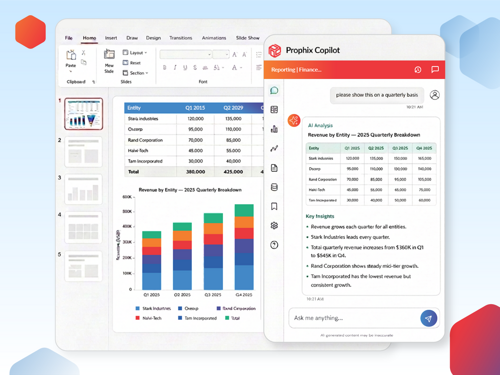
- More reliable, predictive forecasts that enable faster planning cycles. Predictive forecasting helps teams to develop more accurate data baselines, reducing data validation and leading to more proactive, responsive budgeting.
- Continuous scenario modelling that enables stronger decision-making. Finance teams and leaders have on-demand visibility into potential outcomes from specific risks and budget decisions, shortening planning cycles and allowing for greater agility during critical conversations. For example, it can test the risks of cost reduction with validated data.
- Proactive anomaly and exception detection for explainable reports. AI flags potential issues early in planning cycles, reducing the need for investigation close to deadlines, and ensuring data is clean and accurate - ready for the board and auditing.
- Streamlined, automated reporting, supporting rolling forecasts. Finance teams no longer need to focus on manually pulling and verifying data, allowing them to focus more on building strategies.
Traditional vs. AI-Driven FP&A
Traditional processes are slower, harder to scale, and more fragmented compared to AI-augmented alternatives. A traditional setup relies on manual spreadsheet editing, disparate data sources and systems, and a setup that prevents FP&A from scaling with the business.
The use of AI in FP&A is an evolution of the department’s function. It is not replacing or fixing traditional processes, but is instead making them faster, more scalable, and easier to integrate. AI-augmented FP&A operates on top of integrated data, and is refined over time as updated data emerges.
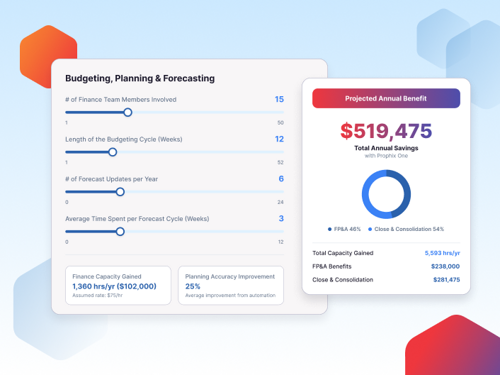
With AI, FP&A teams gain capability as high-volume, manual work is delegated, allowing them to focus on strategy and analysis.
Will AI Replace FP&A Teams?
FP&A teams sign the forecast. A finance leader is on the hook for the assumptions behind every plan, every scenario, every variance explanation that goes to the board. AI does not carry that accountability and is not built to.
What AI does is absorb the high-volume preparation work: data gathering, reconciliation, first-draft reporting, scenario modelling. The analytical, strategic, and judgement-driven work stays with finance. Forecasts still need interpretation. Scenarios still need a recommendation. Boards still need a finance leader who can defend the numbers.
The role of FP&A is shifting, not shrinking. Manual data gathering, reconciliation, and report drafting are being absorbed by AI. The work that remains requires human judgement: interpreting variance, recommending action, advising leadership on the numbers, and signing off on the assumptions behind every plan.
FP&A teams that move first on AI build durable advantages. Less time on data preparation means more time on the conversations that drive the business forward.. We've seen this shift play out in our customer base: as AI absorbs the preparation layer, FP&A's strategic value to the business compounds.
Key Benefits of AI in FP&A
The use of AI in FP&A has positive impacts on finance roles, forecasting accuracy, and strategic insight strength, with measurable outcomes that compound as automation extends across more workflows.
Impact on Finance Roles
With the help of AI, the modern role of FP&A is less about pulling and preparing data and is more about interpreting, judging, and making decisions (such as quantifying downside risk) based on that data. It expands finance’s role, allowing it to become more visible and valuable within the business as a strategic partner.
FP&A teams now wield more influence, both with more time to generate insights and with the added benefit of accurate data and pattern recognition.
Increased Forecasting Accuracy
Following manual processes, finance teams are restricted to capturing periodic “snapshots” of what is likely to happen. With AI, FP&A can respond proactively to business changes by generating reports for leaders based on current figures rather than historical data. The further knock-on effect is a reduction in the planning and decision-making cycle time.
By using AI-powered financial forecasting software, data is continuously processed, meaning rolling forecasts are more viable.
The accuracy gains are measurable across the FP&A profession, not just within Prophix's customer base. FP&A Trends research found that 65% of organisations using AI or ML rate their forecasts as "great" or "good," compared to just 42% of organisations not using AI - a 23-point gap that compounds over every planning cycle.
Businesses such as Sammons Financial Group have used Prophix One Financial Planning & Analysis and AI-augmented processes to cut annual expense-planning preparation time by up to 90%.
Enhanced Strategic Insights
Manual FP&A cannot process deep patterns and spot anomalies and inaccuracies at scale. With AI, teams can analyse large, complex datasets and confidently deliver accurate, actionable insights to finance leaders, ready to present to the board.
Finance teams can now spot correlations and potential concerns at speed and depth. FP&A always has final scrutiny and say on any exceptions raised.
What’s more, AI supports extremely efficient scenario modelling, meaning there are more routes and options available to decision-makers sooner.
Augmenting FP&A with AI: Preliminary Points to Consider
Before rolling out AI in FP&A, address the foundational items: workflow design, data quality, ERP integration, change management, and governance. Each is an addressable risk - but only with deliberate planning.
It’s crucial to check and verify your workflow and process design before a phased rollout to ensure all functions operate as expected. Data quality, integrations, change management, and governance gaps must all be addressed during a careful rollout. Without that foundation, AI amplifies whatever process gaps already exist instead of resolving them.
- Using AI with FP&A functions is only effective if workflows and processes are logically designed. What’s more, AI-augmented FP&A relies on a carefully controlled financial close. It is vital to clean and standardise the information it works with. This helps to maintain its consistency and reliability, creating a baseline for it to learn and develop from.
- Integration complexity via ERP fragmentation can lead to process gaps, missing data, and unreliable analysis. Using the right data aggregation platform can resolve this at the source, ensuring all systems communicate and that AI knows where to pull information from.
- “Pushing” finance to adopt AI risks confusion and resistance, meaning there must be an emphasis on how it augments their roles, both in how you deliver training and how you design workflows. By carefully redesigning workflows to gradually support and benefit existing processes, FP&A will gradually adapt, continuing to see the positives and becoming more receptive.
- AI requires careful governance, paying attention to standards such as SOX - or, businesses risk compliance issues. Review layers must be built into the process, ensuring that all AI decisions are scrutinised before reports are filed. Using glass-box AI means you have access to transparent and traceable logic behind outputs, satisfying governance needs. Black-box models hide their logic and make decision pathways invisible.
Implementing AI in FP&A: Best Practices
Implementing AI in FP&A looks different for each organisation; however, it’s crucial to work on process and workflow design before phasing the technology in. Consider how it will operate with your existing systems, how you can build team capability, and how to phase AI across the whole department.
AI and Existing Systems
Process and workflow gaps, such as miscommunication between fragmented ERPs, affect the quality of AI results. It’s vital to map out how data flows across your department and ensure systems connect to and communicate with each other.
Choose an AI solution that is built to integrate with your systems and processes, acting as a single source of information and truth (reducing the need for manual rework).
Standardise data formats to reduce rework in the event of file confusion close to cycle deadlines. Prioritise a glass-box AI solution that ensures complete traceability.
Team Capability Building
FP&A teams require time and space to build capability in and lower resistance to working with AI. Instead of applying AI to existing workflows across the board, teams should have time to grow into how to use these tools and the value they bring to everyday tasks. Start slowly to build familiarity and confidence.
New workflows phasing in AI must also have clear boundaries, i.e., where AI decision-making ends, and where finance decision-making can begin. Be exceptionally clear on the power teams have over AI work, and establish that people always have final say.
Team capability building will always be continuous as tool usage and familiarity increase, and as use cases arise and change over time.
Phasing the Implementation Process
“Rushing” AI implementation risks errors, unexpected results, and FP&A resistance. By steadily phasing implementation, starting with the highest-impact use cases, it is easier to review outcomes and to ensure systems and workflows can adapt to change at scale.
The highest-impact cases to consider during a phased rollout include automated reporting, reconciliations, and scenario modelling. Apply AI to workflows falling under one use case to begin with, measure the results, then adjust and recalibrate where necessary.
Ahead of a complete rollout, your workflow and process design must account for governance as standard, not as an afterthought. That means applying review layers and validation checkpoints to ensure AI delivers the results you expect, before a broader rollout.
Governance and Risk Management in AI-Driven FP&A
Running AI-driven FP&A responsibly means accounting for data privacy, regulatory alignment, and audit readiness. Every action and decision AI undertakes must be reviewed, validated, and recorded - and finance must retain oversight at all times.
Adhering to data privacy means controls must outline where AI has access to sensitive information, how it uses it, and how they are documented. As regulators and compliance standards demand, every decision and process followed with AI must also be fully explainable and traceable, which in turn supports a smoother auditing process when it arises.
Structuring governance, such as by adding review and validation points to each workflow at multiple steps, ensures that FP&A proactively maintains these standards. Accounting for data and model design gaps also reduces bias and inaccuracies in AI outputs.
It’s another reason why anchoring process design with glass-box AI is crucial. By default, every decision is calculable and available as a documented breakdown.
Critically, finance keeps complete oversight, handling judgement and reviewing exceptions (with AI performance), while AI handles the high-volume tasks.
Real-World Examples of AI in FP&A
AI is already supporting FP&A teams across the US to compress forecast cycles, speed up scenario modelling, and improve reporting accuracy.
For example, organisations like Bethel University took steps to automate fund reports, faced with manual and sporadic data insights. Since adopting Prophix One, the organisation has cut its budgeting time by half to as little as 45 hours per week during peak season.
Using AI to boost reporting accuracy is helping companies like Silafrica to avoid publishing profit errors that risk compliance issues, reputational damage, and forecasting viability. With the help of AI and automation, the plastics firm delegated high-volume data aggregation and established a robust review and governance layer. As a result, the firm has cut up to $1 million in net profit reporting errors.
Health Connect America, too, moved away from time-consuming, Excel-heavy processes to streamline its budgeting processes. With AI-augmented FP&A, the healthcare provider cut month-end reporting cycle times by 56% and boosted operating contribution actuals to budget variance by 93%.
AI Technologies Used in FP&A
AI technologies such as machine learning, natural language processing, predictive analytics, and workflow automation all support FP&A in different ways. Specifically, they enable stronger forecasting, report generation, scenario planning, and data consolidation, respectively.
To break these capabilities down further:
- Machine learning dives deep into historical data, scanning thousands of data points to deliver pattern analysis that would take extensive human hours to process and analyse. This helps to provide a more reliable forecasting baseline, rolling forward and always ready to build strategic analysis on, giving FP&A more time and freedom to break down the numbers.
- Natural language processing translates structured, complex financial data into straightforward narrative explanations. For example, FP&A can use it to break down monthly variance analysis into a few short sentences ready for the board or for simple end-of-report summaries.
- Predictive analytics supports the building of “what-if” scenarios at speed and depth, by generating assumptions driven by forecasts and precedents. For instance, should a client break from the business, and FP&A needs to analyse the downstream effects, AI can develop potential scenarios and help teams decide whether to make investment decisions.
- Automation handles repetitive, high-volume, rule-based tasks, reducing the need for manual data gathering and cleaning. FP&A can use it to consolidate information from disparate sources such as different ERPs and endpoints, reducing time otherwise spent on manually searching for and verifying the data by hand. This can be especially helpful when streamlining month-end closes, for example, with a glass-box, finance-owned solution ensuring that all actions taken are explainable and adjustable with exception routing.
FAQs About AI in FP&A
What's the difference between AI in FP&A and traditional FP&A automation?
Traditional FP&A automation handles fixed, rule-based tasks like scheduled report generation or static formula updates. AI in FP&A goes further: it learns patterns from historical data, generates predictions, surfaces anomalies, and adapts as conditions change. Most modern FP&A platforms combine both, with AI layered on top of standard automation.
Is AI safe to use for SOX-controlled FP&A processes?
Yes, when proper controls are in place. SOX compliance requires explainable decisions, complete audit trails, controlled access, and documented human review at every checkpoint. Glass-box AI - with traceable, reviewable, and adjustable outputs - supports each of these requirements. Black-box AI is not compatible with SOX-controlled processes.
How accurate is AI forecasting compared to traditional methods?
AI forecasting accuracy depends on data quality, the volume of historical data, and the consistency of the inputs. With clean, well-structured data and the right model, AI-driven forecasts typically outperform manual or static spreadsheet-based forecasts on accuracy and on speed. The bigger gain is the rolling cadence: AI updates forecasts continuously rather than at fixed intervals.
What FP&A use cases see the fastest payoff from AI?
Three workflows tend to deliver the fastest measurable impact: rolling forecast generation, scenario modelling, and variance analysis narrative drafting. Each is high-volume, structured, and dependent on data the AI can already access. These are the right starting points for a phased rollout.
Will AI tools work with my existing ERP and finance systems?
Yes, when the AI solution is built for finance integration. Look for platforms with established connectors to major ERPs, source-system flexibility, and a single source of record for FP&A data. Fragmented ERP environments are common in mid-market and enterprise finance teams, and the right platform handles the consolidation work without manual rework.
How do FP&A teams start with AI?
Start with one workflow, on clean data, with guardrails and review checkpoints already in place. Rolling forecasting and automated reporting are common first use cases. Measure results against clear KPIs - cycle time, forecast accuracy, exception volume - before expanding to additional workflows. A phased rollout consistently outperforms full-scale deployment.
Conclusion
When deployed effectively, using AI in FP&A offers a clear structural advantage - it gives finance total control over continuously validated, decision-ready data. It speeds up planning cycles, improves forecasting accuracy, and gives finance teams complete ownership of reliable insights they can build strategies on.
While many companies discuss the future of AI and FP&A, its benefits are already being reaped in the here and now. Teams currently building on AI are strategic business partners, not just data gatherers - and are invaluable in helping their leaders make better-informed decisions amid changing market demands.
This is where finance shifts from reactive reporting to decision-ready planning. Prophix One is a single, finance-owned close orchestration tool that brings all of the benefits of AI and FP&A together - tour our demo today to learn more about how it could make your finance processes more efficient, predictable, and accurate.
Sources
1. Prophix. (N.d.). AI-Powered FP&A Software. Prophix. Retrieved April 28, 2026, from https://www.prophix.com/use-case/financial-planning-analysis/
2. Prophix. (N.d.). Financial Forecasting Software. Prophix. Retrieved April 28, 2026, from https://www.prophix.com/use-case/forecasting/
3. Prophix. (N.d.). Inspiring engagement and accountability at Sammons Financial Group. Prophix Customer Stories. Retrieved April 28, 2026, from https://www.prophix.com/customer-stories/inspiring-engagement-and-accountability-at-sammons-financial-group/
4. Prophix. (N.d.). Bethel University majors in budgeting and reporting. Prophix Customer Stories. Retrieved April 28, 2026, from https://www.prophix.com/customer-stories/bethel-university-majors-in-budgeting-and-reporting/
5. Prophix. (N.d.). Stretching to new financial heights at Silafrica. Prophix Customer Stories. Retrieved April 28, 2026, from https://www.prophix.com/customer-stories/stretching-to-new-financial-heights-at-silafrica/
6. Prophix. (N.d.). Revamping finance processes for accuracy and efficiency with Health Connect America. Prophix Customer Stories. Retrieved April 28, 2026, from https://www.prophix.com/customer-stories/revamping-finance-processes-for-accuracy-and-efficiency-with-health-connect-america/
7. Prophix. (2025, July 10). The future of AI and FP&A: What CFO’s need to know today - and tomorrow. Prophix Blog. Retrieved April 28, 2026, from https://www.prophix.com/blog/future-of-ai-fpa/
8. Prophix. (N.d.). Prophix Free Demo. Prophix. Retrieved April 28, 2026, from https://www.prophix.com/demo/