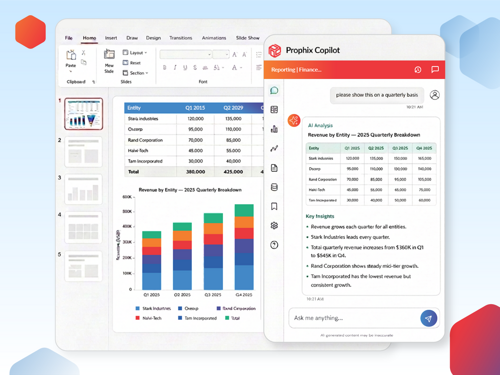
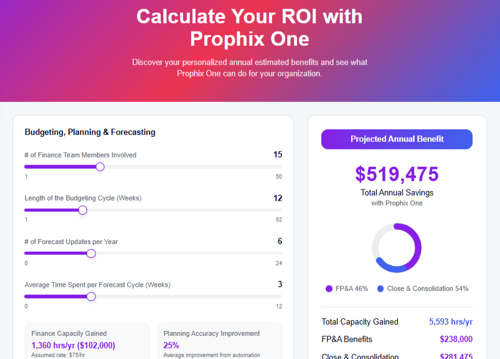
AI is already changing how finance and accounting teams work - automating reconciliations, flagging exceptions, and compressing the close cycle. This guide covers what AI for accounting actually means, the technologies behind it, the use cases driving real results, and what the best-run teams are doing to deploy it responsibly.
AI's rising popularity across modern accounting workflows shows a clear shift in practical capacity - with adopters already building structural advantages over their competition. It is a force multiplier, automating high-volume manual tasks and freeing up accounting talent to focus on strategy and analysis.
In this article, we explore how and why AI is helping finance teams rethink accounting workflows, and where it is most effective.
What is AI for Accounting?
AI for accounting is a broad term covering several technologies - machine learning, natural language processing, and agentic systems - that automate high-volume, rules-based accounting work while keeping judgment and oversight with the team.
Finance and accounting teams already use AI across a range of core workflows, including reconciliation, reporting, and close management. It does not replace the controller's role, but it does reduce the volume of repetitive work sitting between the team and higher-value responsibilities like analysis and advisory support.
Types of AI Used in Accounting
Several different technologies sit under the AI umbrella. Finance and accounting teams will encounter them in combination rather than in isolation:
- Machine learning (ML): Algorithms that learn patterns from historical accounting data, used for transaction categorisation, anomaly detection, and first-draft forecasting.
- Natural language processing (NLP): Technology that interprets written inputs like invoices, contracts, and policy documents. It powers document extraction and chat-style queries over financial data.
- Large language models (LLMs): Technology that generates summaries, narratives, and first-draft explanations from underlying data. Finance and accounting teams use them for flux commentary, memo drafting, and answering technical accounting questions.
- Agentic AI: The newest layer, moving beyond automation to systems that act on objectives and adapt as conditions change. An agent can monitor a close, trigger a reconciliation, route exceptions, and learn from outcomes - all within guardrails that finance defines and owns.
Will AI Replace Accountants?
No. Finance and accounting teams carry legal, regulatory, and fiduciary responsibility that AI cannot hold - which is the structural reason AI expands accounting capacity rather than replacing it wholesale.
Consider the reality of the role: a controller signs off on the close. An auditor signs off on the financials. Under SOX regulations, the CFO personally certifies that financial statements are accurate. Whatever the system outputs, a human still owns the final number that reaches the auditor. That is the real answer to the question of AI replacement, regardless of how capable the technology becomes.
What AI does do, is absorb the high-volume, rules-based work that is difficult to scale with headcount alone - including transaction matching, data extraction, first-draft reconciliations, and exception flagging. Decisions, sign-offs, and judgment calls stay with the team.
The job itself changes, though. Rather than keying entries and chasing reconciliations, finance and accounting teams spend more time on more strategic work, audit readiness, and advising the business on the numbers. For mid-market teams handling growing complexity across entities, systems, and regulatory overlay, AI makes it possible to handle more work with the same team rather than hiring into every new pressure point.
The accounting professionals who do best with AI treat it as another system under their control - calibrated, monitored, reviewed, adjusted - rather than as an autonomous force acting around them.
Why Finance Teams Are Rethinking Accounting Workflows with AI
When deployed with clear guardrails, AI takes on the high-volume work without displacing the team doing the thinking. The result: faster closes, fewer surprises at quarter-end, and more time for the work that actually requires an accountant.
Used effectively, AI helps finance and accounting teams to streamline and automate manual processes while still giving them complete control and final say over workflows, reports, and exceptions.
Companies like KBD Group use autonomous finance software to handle three times its typical business volume. By doing so, it replaced legacy Excel spreadsheets and outdated reporting software in less than a month.
Finance and accounting teams use AI to handle tasks that would otherwise take considerable time and effort. In the workflow, it can automate data capture and transaction matching, continuously reconcile accounts, and raise anomalies and exceptions for humans to review.
With that in mind, AI is an opportunity to augment accounting processes rather than replace roles and responsibilities. It handles high-volume tasks to free up finance and accounting personnel to focus on other areas that require their expertise and judgment, such as analysis and strategy building.
Below, we explore the following issues surrounding the use of AI for accounting:
- High-impact use cases for AI in accounting workflows
- Responsible best practices for deployment
- Current benefits and challenges
- Where AI shows up in the accounting tech stack
- The future direction of AI in accounting and finance
High-Impact Use Cases: What Leading Teams Are Doing Right
Six workflows see the fastest payoff when finance and accounting teams deploy AI: planning cycles, exception monitoring, accounts payable, the financial close, expense management and fraud detection, and tax research and preparation.
With the support of AI, finance and accounting teams are accelerating planning cycles, automating exception monitoring, modernising AP, and compressing the financial close.
Let's explore each of these business outcomes and how artificial intelligence in finance enables them.
Accelerating Planning Cycles
AI helps finance and accounting teams to reduce planning cycle times and improve the accuracy of their forecasts. This leads to more confident and dynamic decision-making.
AI enables rolling forecasting, managing, matching, and processing data, providing reliable reports at scale to support stronger, more efficient planning.
Automated Exception Monitoring
Accounting teams are monitoring exceptions in real time rather than uncovering issues at the point of close or during auditing. Their risk of finding errors at critical moments and potentially slowing down cycles is significantly reduced.
AI reduces human effort used on data cleaning and management unless necessary, supporting more streamlined, predictable, and repeatable processes.
However, a rolling exception handling system rooted in AI must always be based on rules and guardrails set and owned by the finance team. Finance delegates low-level tasks to AI, and handles exceptions outside its remit in real time.
Modernising Accounts Payable
AI-augmented finance and accounting teams are continuously improving data matching accuracy and reducing downstream reconciliation concerns, building more reliable close foundations.
Driven by manual task removal, AI enables this through intelligent, rolling data capture. It learns from data patterns and invoice inputs, and automatically routes workflows and tasks to the correct managers and controllers.
Compressing the Financial Close
Finance and accounting teams are closing faster while boosting confidence in their reported numbers, with data reconciled and exceptions raised throughout the fiscal year. Data is ready to report on as deadlines approach, removing the need for time-consuming investigations or escalations (particularly at the year-end close).
Glass-box AI for accounting transparently automates reconciliations and raises exceptions based on finance's rules and ownership. This means controllers can always see how the AI took specific actions and why, in case they need to reverse decisions or explain actions during auditing, or to leadership after the close.
Streamlining Expense Management and Fraud Detection
Finance and accounting teams are using AI to monitor expenses and flag anomalies before they reach the close. On the expense side, AI categorises transactions, enforces policy automatically, and surfaces out-of-policy spend for review. On the fraud side, machine learning models trained on historical transaction patterns identify suspicious activity - unusual vendors, duplicate invoices, or off-hours approvals - at a scale manual review cannot match.
However, finance teams still own the judgment call on each exception raised. AI surfaces the signal, but the team decides what action to take in each case.
Supporting Tax Research and Preparation
Large language models trained on tax code and accounting standards give staff accountants faster access to answers on technical questions, such as revenue recognition, lease accounting, or jurisdictional tax treatment - areas that once required hours of manual research.
These tools draft first-pass analysis and cite their sources, allowing the accountant to review, validate, and sign off. The technology speeds up the preparation layer, but the expertise and accountability remain human.
Best Practices for AI in Accounting
A responsible AI deployment is phased, built on clean and centralised data, and keeps finance teams in control at every decision point. Seven practices separate successful rollouts from expensive false starts.
Roll Out Without Disruption
As with any new solution, a successful AI rollout depends on strong existing processes. If there are issues, AI can amplify them, so we recommend rolling out in phases to minimise disruption and unexpected results.
To start, analyse and adjust methodologies and practices before applying AI to effectively "fix" workflow issues. Always test individual workflows or categories, then measure the results before moving on to others.
Build on Clean Data First
AI for accounting depends on clean, standardised data if it is to deliver value. Applying AI to incomplete or inconsistent datasets can cause it to amplify any problems it reads, creating unreliable analyses and additional manual work.
Any information you feed AI must be standardised, formatted, and complete - build this into your design process rather than making it an afterthought. For example, consider choosing centralised, close orchestration software to consolidate fragmented ERP data in one dashboard.
Keep Finance in Control
Finance teams must retain control of and stay "in the loop" on any decisions that technology makes. Allowing AI to post to the close without human review, for instance, leads to inaccuracies, missing transactions, and faulty forecasting.
Build a predictable, continuous "review" layer into your workflows. Design workflows so that exceptions requiring high-level judgments are always forwarded to controllers, and ensure journal entries are manually checked before posting to the close.
Build Team Capability Continuously
Adapting AI to legacy processes and systems requires deliberate, intentional capability building. Finance and accounting teams should view training with AI as a structured transition, not "catching up" at scale.
Set training checkpoints and benchmarks, and measure human confidence and capability over time. Prioritise AI familiarity, literacy, and skills when hiring into the department during scaling.
Wolters Kluwer found that 85% of finance leaders it surveyed view AI skills as "important" when hiring for finance team functions.
Prioritise Governance and Explainable AI
As per SOX compliance standards, data governance and workflow explainability are non-negotiable. Finance and accounting teams using AI must protect data integrity with clear audit trails, controlled access to information, and total visibility over decision-making.
Glass-box AI models support this with traceable, reviewable, and adjustable outputs. In the reverse case, black-box AI solutions obscure their logic and create compliance risks.
Finance and accounting teams must enforce "Human-in-the-Loop" validation to review decisions and keep a comprehensive inventory of how and where AI interacts with workflows.
Measure AI Performance
AI performance should be measured with clear KPIs from the get-go, such as:
- Average task processing time
- Number of tasks processed without intervention
- Number of exceptions raised incorrectly (that don't require human review)
These metrics ensure AI is operating within its guardrails and continues to deliver value. In addition, reviewing its performance regularly helps sustain the gains it does make, while allowing controllers to make adjustments for further improvements.
Design for Human-AI Collaboration
Always design finance and accounting workflows with human-AI collaboration by default, remembering that AI augments, rather than replaces human expertise and effort.
Set clear checkpoints for humans to review AI work and to ensure that all decisions it makes are analysed before posting to a close, or delivering reports and audits. This supports consistency, compliance, and makes effective use of human expertise.
Benefits and Challenges
AI delivers measurable gains in close efficiency, data control, and compliance readiness - but brings real risks around data quality, integration, bias, and change management. The best-run rollouts plan for both from day one.
AI delivers clear, measurable gains in close and auditing efficiency, data control, and compliance adherence. However, pay attention to data quality, integration with existing ERPs, managing change, and balancing human oversight.
Let's explore the core values and AI risk in accounting in closer detail.
Key Benefits
- Task automation: High-frequency tasks such as transaction matching are handled continuously, reducing manual rework during critical periods.
- Faster closes: Continuous reconciliations reduce end-of-cycle bottlenecks, allowing finance and accounting teams to close faster with minimal escalations.
- Stronger decision-making: More consistent, predictable, and validated data boosts report reliability, providing leadership with greater confidence in the numbers.
- Compliance readiness: Audit trails are maintained, and exceptions are flagged in real time, meaning departments are always up to date and ready for auditing.
- Capacity reallocation: Finance and accounting teams shift efforts from manual work to analysis, review, and strategy.
Where Implementation Requires Attention
- Data quality: Incomplete or inconsistent data can lead to inaccuracies and AI hallucinations, causing manual rework. Data must be standardised to ensure that AI outputs are consistent and that scaling can proceed.
- ERP integration: Fragmented systems lead to flow gaps, incomplete analysis, and missing transactions. AI processes must communicate openly across all ERPs to minimise manual work and ensure continuity.
- Change management: Unstructured rollouts create employee resistance and cause confusion. From day one, AI must augment existing processes, not replace them - and be phased into use alongside staggered training programs.
- Regulatory standards: Using black-box AI increases compliance risk and reduces clarity. Glass-box, explainable AI solutions break down how they make decisions, supporting audits and ongoing adjustments.
- Algorithmic bias: AI models trained on historical data inherit the patterns in that data - and any bias within it. In accounting, this matters most for fraud detection, vendor risk scoring, and any system that flags transactions for review. Finance and accounting teams should audit models regularly for disparate impact and adjust training data where bias is identified.
- Data privacy and accountability: Clear ownership over every AI decision is non-negotiable. That means a documented chain - covering who set the guardrail, who approved the action, and who reviewed the output.
- Human oversight balance: Without structured, human-led oversight, AI operates without the context that experienced accountants bring to judgment calls. "Human-in-the-Loop" reviews ensure its actions are controlled and accuracy is upheld.
Where AI Shows Up in the Accounting Tech Stack
AI in accounting clusters around four jobs: close management, intelligent document processing, AP automation, and technical accounting support. Most of it is embedded - built directly into the workflow rather than bolted on afterwards.
Embedded AI lives inside the platform that finance and accounting teams already use day-to-day. Reconciliations, close checklists, journal entries, and reporting all run within the team's existing controls, with audit trails and access permissions already in place. That is where the real day-to-day work happens.
The four most common accounting-specific AI categories are:
- Close management and reconciliation: AI automates the close checklist, runs continuous reconciliations, and routes exceptions to the team for review.
- Intelligent document processing and OCR: Tools in this category extract structured data from invoices, receipts, and contracts, feeding clean data into downstream accounting workflows.
- AP and invoice automation: AI matches invoices to POs, flags anomalies, and codes transactions. These systems integrate with close management software so data flows directly into the close workflow.
- Technical accounting assistants: Large language models trained on accounting standards that answer questions on GAAP, IFRS, revenue recognition, and lease accounting. Useful for first-draft memos, though not for final judgment.
General-purpose AI assistants handle one-off work like summarising a standard, drafting a memo, or running an ad-hoc calculation. However, they should not touch live financial data without clear guardrails and oversight in place.
For a broader comparison of AI tools across the wider finance tech stack - including FP&A platforms, spend management, and productivity layers - see our guide to AI tools for finance teams.
Future Trends
Accounting automation is moving from rules-based task execution toward hyperautomation and agentic AI. Evolving roles, stronger ethical oversight, and real-time insights are defining what the next few years of accounting will look like.
Finance and accounting teams are moving away from traditional automation toward more autonomous workflow handling thanks to advances in AI capabilities. It already supports more efficient and reliable close orchestration.
Three shifts are shaping the direction of accounting automation in the future:
From preparer to strategic advisor. The evolving roles of finance and accounting professionals are most visible in how time is spent. AI takes on the preparation layer - data entry, matching, first-draft reconciliations - while accountants shift toward advising the business, interpreting the numbers, and making recommendations to leadership. AI acumen and data literacy are becoming core hiring criteria alongside technical accounting skills.
Generative AI for narrative and analysis. Flux commentary, board memos, audit narratives, and executive summaries are all areas where generative AI now produces credible first drafts. The accountant edits, validates, and signs off, but the blank-page problem is gone. For accounting teams, that alone reclaims several hours per close.
Hyperautomation and real-time insights. The financial close is shifting from a quarterly production event to a continuous review process. AI-driven algorithms handle matching, reconciliation, and exception routing in the background, while predictive data analytics flag anomalies before they grow. Controllers can access real-time insights into close status, cash position, and workflow bottlenecks without waiting for month-end summaries.
Prophix One clients like Jamul Casino have improved month-end close efficiency by at least 30%, saving more than $15,000 in labour costs. The company has reduced its budgeting cycle by 58%, too, since adopting Prophix One Account Reconciliation and Financial Planning & Analysis, with glass-box AI enabled.
With these shifts also come sharper expectations around ethical oversight, data security, and managing bias in AI models. The finance and accounting teams leading on AI adoption are the ones investing in governance frameworks, explainability standards, and ongoing performance audits alongside the technology itself. AI that finance teams cannot trust is AI that they cannot deploy.
It is simply that, as AI for accounting evolves and as it takes on more manual tasks, finance and accounting teams must adapt and evolve, too, while adjusting regulatory practices:
"The convergence of accounting with (AI) technologies marks the beginning of a new paradigm that promises not only to improve efficiency and accuracy, but also to raise ethical and security challenges, as well as the need for an adaptive regulatory framework. It is therefore crucial that practitioners and researchers continue to explore these technologies, assess their practical and ethical implications, and develop strategies for their responsible integration." (Sanz Martín, L., Parra Dominguez, J., Corchado, J. M., Zafra-Gómez, E., Castillo-Ramos, V., & Zafra-Gómez, J. L.)
FAQs About AI for Accounting
What are the main use cases for AI in accounting?
The highest-impact use cases are transaction matching and reconciliation, invoice processing, exception monitoring during the close, journal entry drafting, flux narrative generation, and technical accounting research. Each one replaces a high-volume manual task while keeping the accounting team firmly in the review seat.
Is AI accurate enough for accounting work?
AI is accurate when paired with clean, standardised data and proper human-in-the-loop review. Glass-box AI - where every decision is explainable and auditable - is the working standard for regulated financial tasks. Black-box models create compliance risk and should be avoided for anything that touches the close.
What are the risks of using AI in accounting?
The main risks are data quality (inconsistent inputs causing unreliable outputs), fragmented ERP integration, weak change management, compliance gaps from non-explainable models, algorithmic bias in fraud and risk scoring, and over-reliance on AI without structured human review. Each is addressable in the deployment roadmap.
Does AI in accounting affect SOX compliance?
AI use is compatible with SOX compliance when proper controls are in place: explainable decisions, complete audit trails, controlled access, and documented human review at every checkpoint. Black-box AI is not compatible with SOX. Glass-box AI is.
How should a finance team start with AI?
Start with one workflow such as transaction matching or AP, on clean data, with guardrails and a review layer already built in. Measure results against clear KPIs before expanding further. A phased rollout consistently beats full-scale deployment.
What's the difference between automation and agentic AI in accounting?
Automation executes a fixed set of instructions. Agentic AI works toward an objective: it decides what steps to take, adapts when conditions change, and learns from outcomes over time. In accounting, an agentic system can monitor a close, trigger a reconciliation, route exceptions, and surface what the team needs to review.
Conclusion
Using AI for accounting presents a structural advantage already benefiting many forward-thinking companies. It's no longer a consideration for the future, but a current asset that supports more efficient, accurate, controllable, and audit-ready financial recording and close cycles.
However, the technology can only deliver these values when workflows and processes actively support it. That means finance and accounting teams must prioritise clean, centralised datasets, workflow transparency, and gradual rollout and change management so they can legitimately benefit.
Discover how Prophix One™ uses glass-box AI to automate reconciliations, compress the close, and keep finance teams in control of every decision. Book a demo.
Sources
1. Prophix. (n.d.). Building financial strength at Kajima Building & Design Group, Inc. Prophix Customer Stories. Retrieved April 17, 2026, from https://www.prophix.com/customer-stories/building-financial-strength-at-kajima-building-design-group-inc/
2. Prophix. (2025, November 27). AI in Finance: Innovations and Applications. Prophix Blog. Retrieved April 17, 2026, from https://www.prophix.com/blog/artificial-intelligence-finance/
3. Davis, K. (2025, December 29). Year-end Close Process Made Easy: Automation Best Practices. Prophix Blog. Retrieved April 17, 2026, from https://www.prophix.com/blog/year-end-close/
4. Whybrow, S. (2025, May 28). New survey from Wolters Kluwer reveals finance leaders plan to increase agentic AI adoption by 6x in next 12 months. Wolters Kluwer. Retrieved April 17, 2026, from https://www.wolterskluwer.com/en/news/pr-2025-wolters-kluwer-survey-increasing-adoption-agentic-ai
5. Prophix. (2025, June 10). AI risks in finance and accounting. Prophix Blog. Retrieved April 17, 2026, from https://www.prophix.com/blog/ai-risks-in-finance-and-accounting/
6. Prophix. (n.d.). Winning the budgeting jackpot for Jamul Casino. Prophix Customer Stories. Retrieved April 17, 2026, from https://www.prophix.com/customer-stories/winning-the-budgeting-jackpot-for-jamul-casino/
7. Sanz Martín, L., Parra Dominguez, J., Corchado, J. M., Zafra-Gómez, E., Castillo-Ramos, V., & Zafra-Gómez, J. L. (2026). Recent evolution and growth of AI and advanced technologies in accounting and finance: systematic review and bibliometric analysis. Spanish Journal of Finance and Accounting / Revista Española de Financiación y Contabilidad, 55(1), 47–88. Retrieved April 17, 2026, from
https://www.tandfonline.com/doi/full/10.1080/02102412.2025.2582120