According to CFO.com, the average FP&A employee spends 75% of their time gathering data and administering the process, which leaves only 25% of their time for the value-added analysis that drives business performance.
Spreadsheets have long been the foundation of financial planning and analysis. They’re flexible, familiar, and accessible. But as businesses face more volatility, more data, and greater expectations for insight, many finance leaders are asking if spreadsheets can hold up under the pressure.
And the challenges that finance leaders face today extend beyond budgeting and forecasting. CFOs are being asked to deliver faster insights, scenario-test uncertainty, and make AI a practical advantage for the business. FP&A software makes this possible by embedding AI directly into planning, forecasting, and analysis workflows—allowing finance teams to make AI a core competency without building or managing complex models themselves. As autonomous finance and generative AI rise on the CFO agenda, the tools finance teams rely on matter more than ever.
So how do FP&A software and spreadsheets really compare?
What is FP&A software?
FP&A software is for CFOs, finance leaders, and decision-makers to manage reporting, budgeting, forecasting, and planning and track the financial health of the business.
With FP&A software, you can:
FP&A software is a critical component of financial performance management.
What is financial performance management?
Also commonly referred to as CPM (Corporate Performance Management), Financial Performance Management (FPM) refers to the processes, systems, and methodologies organisations use to plan, forecast, measure, and improve financial performance. This includes budgeting, forecasting, reporting, scenario modelling, and performance analysis.
While spreadsheets have historically supported many of these activities, FP&A software better supports organisations dealing with complex data sets, multiple entities, high transaction volumes, or frequent change. As data complexity increases, spreadsheet-based models become harder to maintain, validate, and scale, increasing both risk and effort. FP&A software is purpose-built to manage this complexity while providing structure, governance, and automation.
Now that we’ve established what FP&A software is, let’s look at the differences between FP&A software and Excel.
Difference between FP&A software and Excel
Most companies make the switch to FP&A software because there are limitations in Excel or spreadsheets, including: investment (time and money), ease of use, automation and integration, flexibility and scale, and data security.
Let’s look at the differences in the two across those categories.
Investment in time and money
FP&A Software
An investment (in time and money) is required but guarantees greater accuracy and efficiency for your financial data moving forwards.
Spreadsheets
Free but there is significant time invested into maintenance and updates to ensure data accuracy.
Ease of use
FP&A software
Implementation and training are required, but FP&A software provides structured start-up pathways and models, centralised data, and guided workflows that simplify planning and analysis, even as data volume and complexity increase.
Spreadsheets
Spreadsheets are easy to start with but become difficult to manage as complexity grows. Template maintenance, manual data validation, broken formulae, and version control issues are common—especially when working with large, complex data sets across multiple contributors.
Automation and integration
FP&A software
FP&A software offers pre-built integrations with ERP, CRM, HR, and operational systems and can also integrate with Excel. This allows teams that still rely on spreadsheets to participate in automated, governed processes without sacrificing flexibility.
Spreadsheets
Spreadsheets require significant manual effort to update, reconcile, and consolidate data. Manual copy/paste data entry, adding columns, rows, and formulae can impact the integrity of your workbook.
Flexibility and scale
FP&A software
Highly customisable to meet your unique reporting requirements.
Spreadsheets
Limited flexibility for scale or customisation.
Collaboration and control
FP&A software
Centralised access, real-time collaboration, and controlled inputs ensure everyone works from a single source of truth.
Spreadsheets
Collaboration often relies on email, shared drives, or cloud folders, increasing the risk of errors and misalignment.
Data security
FP&A software
FP&A software enforces data integrity through 3rd party compliance, role-based security, automated workflows, approval processes, and full audit trails, ensuring data integrity, security and confidence in the numbers.
Spreadsheets
Limitations to version control: Security is largely manual, with limited visibility into who changed what and when – making audit compliance difficult.
Benefits of FP&A software
Organisations that switch to FP&A software often realise benefits that extend well beyond efficiency:
Let’s look at the benefits of FP&A software in more detail.
Easy to deploy
Cloud-native FP&A software only requires a web browser. There is no requirement to update to the latest or correct version or install spreadsheet add-ins. Everything you need to budget, plan, and report is available via web browser and your sign-in credentials. What’s more, you can access FP&A software from different devices and access the latest report, update, or data, versus a spreadsheet saved on someone’s desktop.
Streamlined integrations with other systems
Most financial planning involves importing data from your account system, HRIS, or ERP. With FP&A software, these integrations are automated, so your data collection is done automatically – no manual import required. This means your subsequent reports are automatically updated as accounts are added to your Chart of Accounts.
Sophisticated data analysis
FP&A software offers ad hoc queries, high-level general ledger data by account, department, or project, or drill-down into underlying transactions. This level of granularity means finance leaders can perform sophisticated analysis. Top-down planning is also a standard feature in FP&A software, meaning yearly data across months or costs across departments based on historical data is automatically done with built-in functionality. A final example is that new accounts or departments appear automatically in reports, requiring no manual adjustments or input.
Dive deeper into your data with ad hoc analysis
Increased productivity
Spreadsheets require a lot of manual time and effort to update. As a reminder, 75% of finance leaders spend their time manually gathering data and setting up reports in spreadsheets when that time could go towards value-add tasks. FP&A software reduces your need for manual, time-consuming tasks like data entry and pivot tables to free up time to look at your data that informs business decisions.
Better alignment between finance and the business
FP&A software helps finance move from reporting on the business to planning with the business. By connecting financial plans to operational drivers, such as material costs, labour, or capacity, finance, operations, and leadership teams can work from a shared model and a single version of the truth. This alignment reduces time spent debating assumptions and enables more productive conversations focused on trade-offs, priorities, and actions that improve performance across the organisation.
Embedded AI for predictive insights and scenario
Modern FP&A software embeds AI directly into planning and forecasting workflows, allowing teams to anticipate outcomes rather than react to them. Predictive insights highlight trends, anomalies, and risks earlier, while AI-powered scenario modelling enables finance teams to test assumptions and understand the impact of changing market conditions in real time. Because this intelligence is built into the platform, finance teams can leverage AI without needing data science expertise—making advanced analytics accessible, scalable, and actionable for everyday decision-making.
Automated reporting
Automated reporting removes one of the most time-consuming burdens on finance teams. Instead of manually building, updating, and distributing reports each cycle, FP&A software automates report creation, formatting, and delivery. This ensures consistency across stakeholders, reduces the risk of errors, and frees finance teams to focus on analysing results and advising the business—rather than assembling spreadsheets.
It’s not a case of software or spreadsheets
For many organisations, the transition to FP&A software doesn’t mean abandoning spreadsheets overnight. Instead, it means reducing risk, increasing automation, and giving finance teams the tools they need to operate proactively.
The real cost lies in waiting. Every cycle spent managing errors, reconciling files, and manually producing reports is time not spent on value-added analysis. Delaying the switch to FP&A software also means missing out on proactive planning, AI-driven insight, and faster decision-making when the business needs it most.
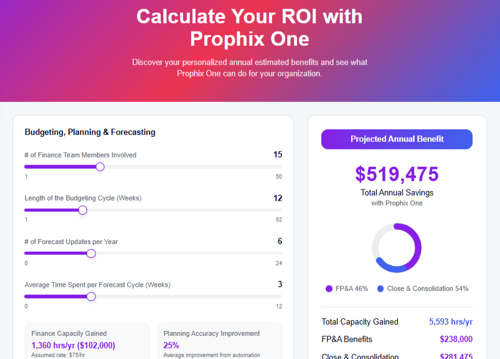
In summary, FP&A software will transform the way you work. Saved time is saved money. If you’re evaluating whether FP&A software makes sense for your organisation, a good next step is to quantify the impact. Calculate the ROI of FP&A software to understand the potential time savings, risk reduction, and business value for your team.
Calculate the ROI of FP&A software today